


Cats and plants: which ones are safe and which ones can be toxic
Plants are beneficial for your cat, but they can also be dangerous!
Sharing a home with a cat and enjoying a house full of plants is perfectly possible. However, there’s something every cat owner should bear in mind: not all plants are safe for them.
Cats are curious animals and, especially when they live indoors, they may be drawn to leaves, stems and flowers. Sometimes they nibble on them out of simple curiosity, other times because they find it stimulating, and in certain cases, they may eat them as part of their natural behaviour. The problem arises when that plant contains toxic substances.
Why do cats eat plants?
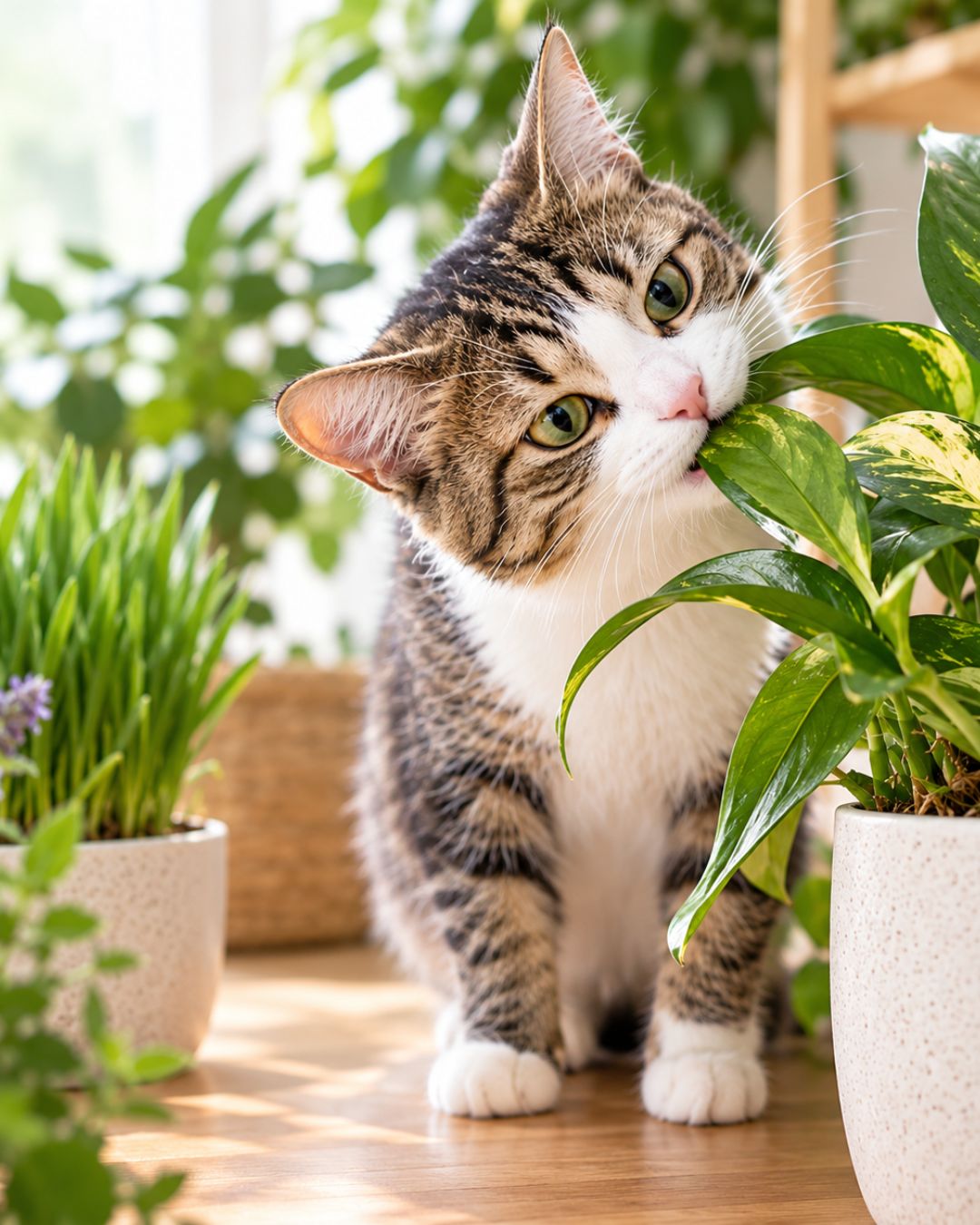
Nibbling on a plant doesn’t necessarily mean that your cat is hungry or wants to destroy it. Cats are natural explorers, and any new element in their environment can pique their interest.
Furthermore, some cats show an interest in grass and other plants as part of their normal behaviour. Whilst grooming, for example, they swallow hair that must subsequently pass through their digestive system.
That’s why it’s important to provide them with safe alternatives and, above all, to know which plants we have in the house and in the garden.
Plants that are safe for cats
If you live with a cat that likes to nibble on plants, a good option is to offer them grass specifically designed for cats. This usually consists of grasses with fine, tender leaves, such as wheat, oats or barley. This way, we can provide them with a plant-based alternative they can explore without having to turn to our ornamental plants.
There are also plants that can be particularly attractive to cats. One of the best known is Nepeta cataria, commonly known as catnip. Its scent can cause some cats to rub against the plant, roll around or become particularly active. However, not all cats react in the same way.
Plants that can be dangerous
This is where we need to be particularly careful. Some ornamental plants can cause problems if a cat chews on or ingests them. Plants that require special caution include:
⛔️ Lilies and other members of the lily family, which can be particularly dangerous for cats.
⛔️ Holly, whose berries and other parts of the plant can cause digestive problems.
⛔️ Poinsettia, whose sap can cause irritation and discomfort if it comes into contact with the skin or is ingested.
⛔️ Mistletoe.
⛔️ Azaleas and rhododendrons.
⛔️ Oleanders.
⛔️ Ivy.
⛔️ Spathiphyllum.
⛔️ Certain species of begonias, alocasias and other ornamental plants.
Toxicity can depend on the plant species and the part of the plant ingested. Therefore, if in any doubt, it is advisable to consult a vet before introducing a new plant into a home with cats.
It’s not just about whether a plant is toxic
Even if a plant isn’t poisonous, that doesn’t automatically mean it’s suitable for your cat. Particularly tough leaves, thorns, sharp edges or certain plant fibres can cause injuries or problems if the animal chews on or ingests them.
We must also pay attention to other products that may be present on the plants, such as fertilisers, insecticides or certain treatments used for their care. Therefore, when bringing a plant into the home, it is advisable to assess the plant and everything that comes with it.
How can I stop my cat from eating dangerous plants?
The simplest measure is to prevent your cat from gaining access to plants that may pose a risk. Placing plants in high places can help, although we shouldn’t rely too heavily on this strategy: cats are excellent climbers and can reach places that seem inaccessible.
If a plant is potentially toxic, the safest option is to remove it from the cat’s environment. Another alternative is to provide cat grass or other safe options for the cat to explore and nibble on.
What should I do if my cat has eaten a toxic plant?
If you suspect your cat has ingested a potentially toxic plant, do not wait for symptoms to appear before seeking veterinary help. Some signs that may indicate poisoning include:
🔹Vomiting.
🔹Diarrhoea.
🔹Excessive salivation.
🔹Weakness or lethargy.
🔹Behavioural changes.
🔹Tremors or convulsions.
🔹Difficulty walking or standing.
The severity will depend on the plant, the amount ingested and the animal’s individual characteristics. If you know which plant your pet has chewed or swallowed, try to identify it and tell the vet. If possible, take a sample or a photograph of the plant to help with its identification.
📌Having cats doesn’t mean you have to give up enjoying a home full of plants. The key is to know which ones might be dangerous and to keep them out of their reach.
Before buying a new plant, always check that it’s safe to keep around cats. And if you’re unsure about a particular species, ask your vet.