


Dog training techniques
A Practical Guide
Although dogs have been by our side for centuries, they are still animals guided by instinct. That’s why training isn’t just a whim: it’s the compass that helps them find their way in our human world, full of rules, routines… and sofas they can’t always conquer.
Training a dog requires time, patience and choosing the right approach. Not all methods work equally well for every dog, nor do they all align with every family’s values. In this guide, we explain the main dog training techniques so you can find the one that best suits your pet.
What is dog training?
Training involves teaching a dog useful skills and behaviours, both for everyday life and for specific activities.
Some examples:
🔹Coming when called
🔹Walking without pulling on the lead
🔹Interacting appropriately with other dogs
🔹Avoiding problematic behaviours
1. Positive training: training through reinforcement
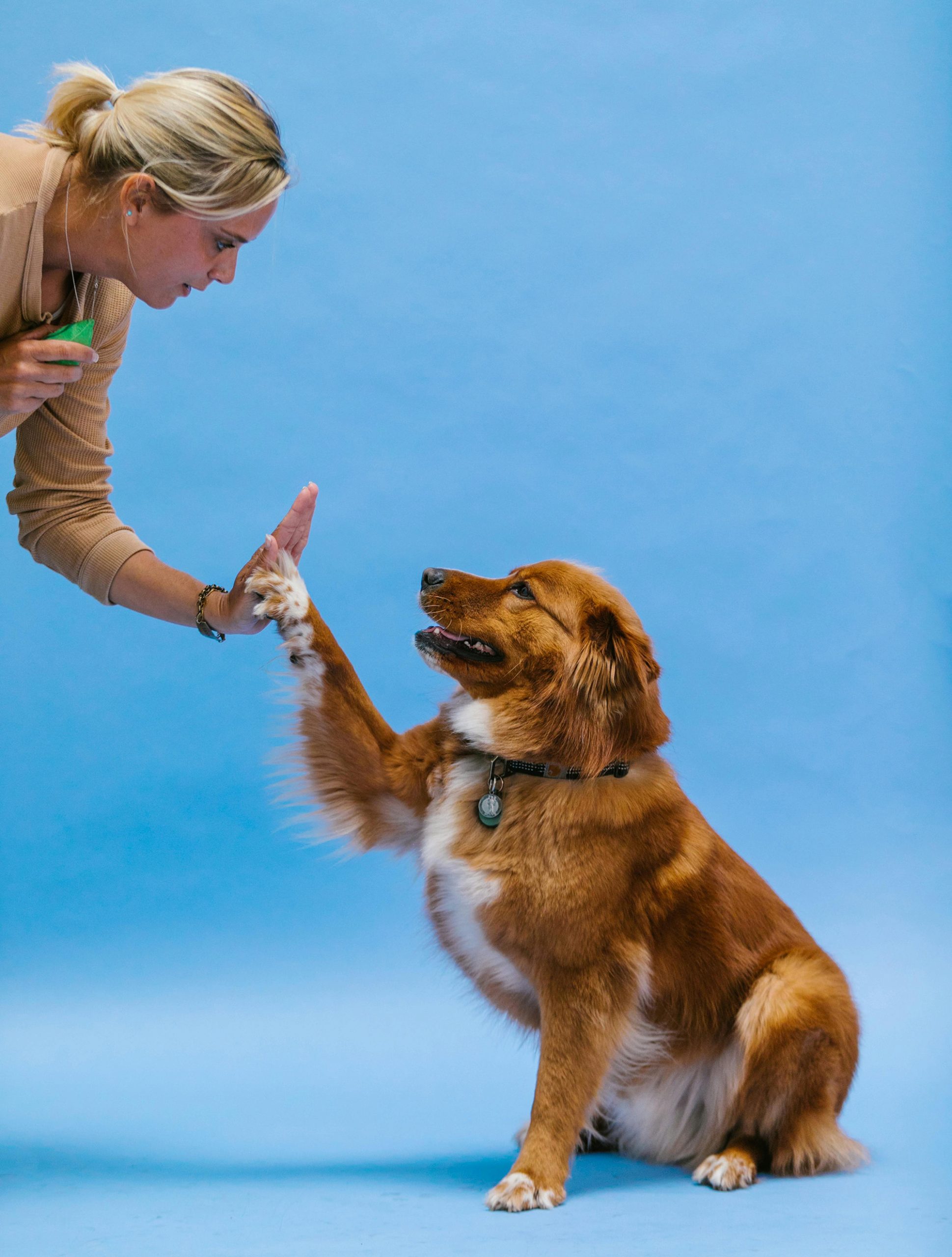
This is the most recommended method today. It is based on rewarding the behaviours we want the dog to repeat.
How does it work? When the dog does something right, it receives a reward (food, a stroke or play). This way, it associates that behaviour with something positive.
Advantages: it strengthens the bond with its owner, improves learning and promotes emotional well-being.
Techniques used in positive training
- Clicker: a sound marks the exact moment the dog does something right.
- Extinction: ignoring unwanted behaviours so that they disappear.
- Incompatible behaviour: teaching an alternative action (for example, sitting instead of jumping).
- Counter-conditioning: replacing negative emotions with positive ones.
- Desensitisation: gradually reducing fear.

Luring technique: guiding as if it were a little game
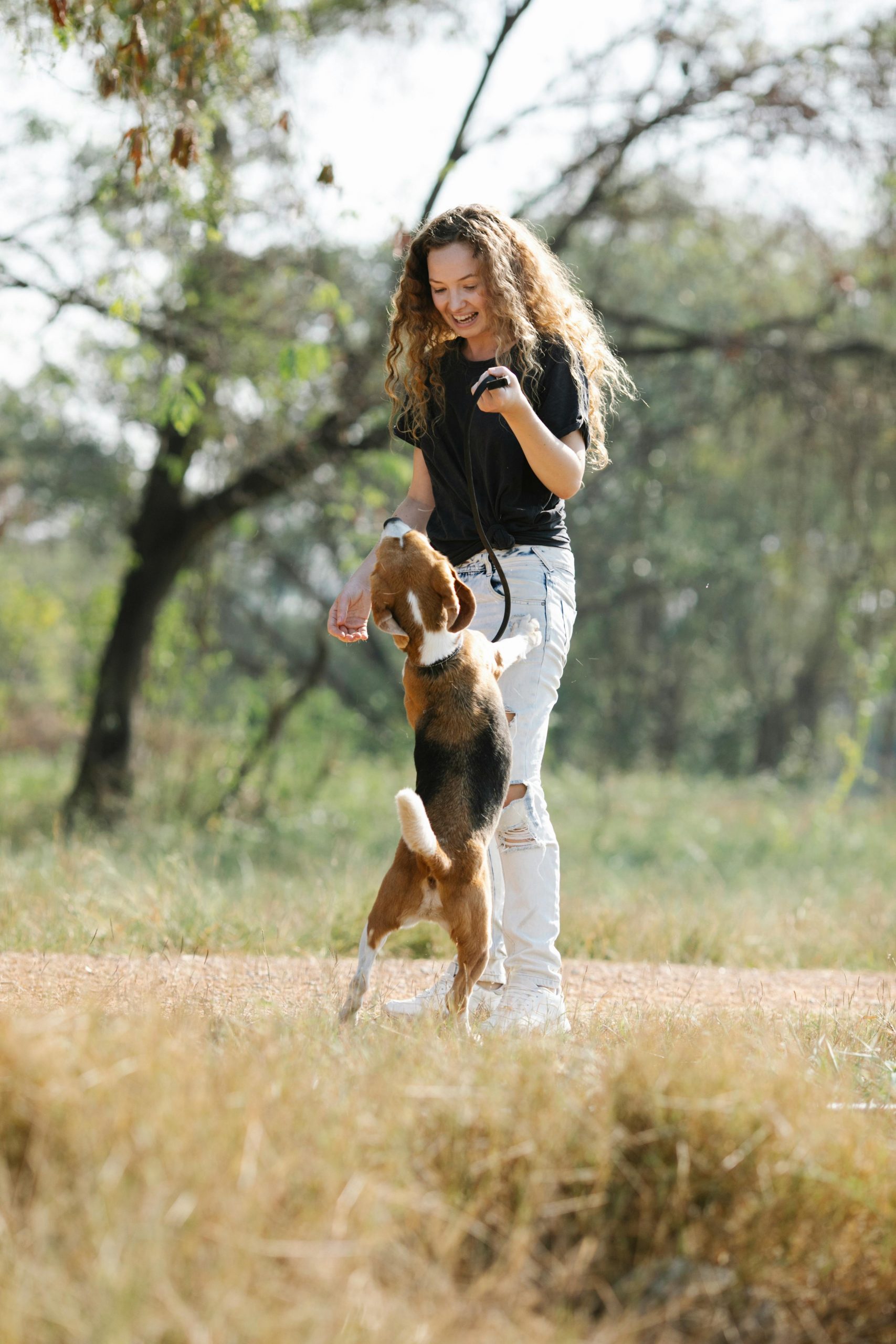
Luring involves guiding the dog with a treat (food or a toy) to get them to perform an action. It’s like drawing a path with a small piece of food: their attention is fixed there and they follow the movement.
It’s very useful for teaching basic commands quickly, although it’s best not to overuse it to avoid the dog becoming dependent on the treat.
2. Traditional training: the most controversial method
It relies on punishment or negative reinforcement to correct behaviour. This includes physical punishment, scolding or the use of punishment collars.
It is falling out of favour because it can damage the bond with the dog, cause fear or aggression, and hinder learning. Nowadays, most professionals advise against this approach.
3. Mixed training: a nuanced balance
It combines positive reinforcement with corrections. Although it may seem like a middle ground, the use of punishment, even if mild, can cause confusion or stress in the dog if not applied correctly.
4. Behavioural training: understanding the dog from the inside
This approach is based on ethology (the animal’s natural behaviour). Here, the aim is not just to teach commands, but to understand how the dog thinks and work from there.
Key points:
- Clear communication
- Consistency
- Calm leadership (without imposition)
It is a respectful method, but requires knowledge and perseverance.
5. Mirror technique: learning by observing
Dogs also learn by watching. In this technique, a trained dog acts as a ‘role model’, demonstrating which behaviours are correct.
It is particularly useful in controlled environments or with sociable dogs.
6. Other types of training
These techniques can be combined with the previous ones:
- Basic obedience: essential commands for everyday life
- Functional training: therapy, rescue or guide dogs
- Ethological approach: encouraging the dog’s natural behaviours
📌If your dog has behavioural problems or you don’t know where to start, it’s best to seek professional help.
Good training not only improves coexistence… it also builds a relationship based on trust, security and understanding. And for a dog, that is the best reward of all.